Whether on an existing or new project, Facility Management is the ultimate objective of BIM. Give life to your building through a digital twin.
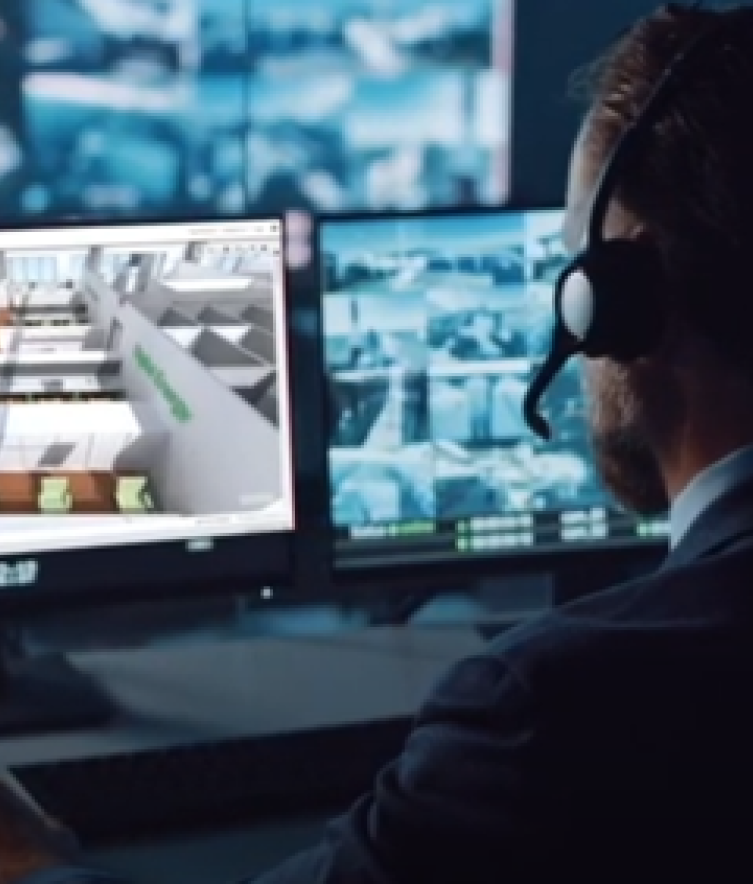
Having a digital twin of your building, regardless of its nature, allows you to monitor its entire life cycle: energy management, preventive and scheduled maintenance, space management, and data management.
The Digital Twin acts as a bridge between the physical and digital worlds through BIM models and sensors that collect real-time data. This enables optimization and leads to better projects in terms of cost savings and profitability.
Real-time monitoring of your building's energy consumption through sensors and integrated building management systems.
Planning of preventive and scheduled maintenance with reminder notifications for technical teams.
Visualization and optimization of your building's spaces through navigable BIM models.
Real estate developers, hospitals, office managers, energy parks, municipalities, and ministries.
Digital Twin technology serves diverse facility types and operational contexts. Real estate developers leverage it for lifecycle asset management and operational excellence. Hospitals monitor complex equipment and critical systems in real time. Office managers optimise space utilisation and energy efficiency. Energy facilities benefit from centralised monitoring. Municipalities enhance infrastructure resilience and public asset stewardship. Government agencies improve transparency and decision-making. Each stakeholder gains bespoke visibility and control through structured asset information connected to BIM foundations.
A Digital Twin transforms BIM models from static design artefacts into living operational assets. Asset and equipment data, technical specifications, and maintenance histories integrate seamlessly within the BIM framework. Real-time sensor feeds enrich the model with operational context. Building Management System connections provide critical performance metrics. Facility Management platforms built on this unified data structure enable predictive maintenance and informed decision-making. The bridge between design intent and operational reality becomes transparent, measurable, and actionable for teams managing complex buildings. With proper Owner-side BIM Advisory, this transition becomes seamless.
Effective operations depend on timely, accurate asset intelligence. Digital Twin solutions consolidate equipment metadata, maintenance schedules, technical documentation, and performance histories into a single source of truth. Maintenance teams access complete asset context during critical tasks. Facility managers identify patterns in equipment behaviour and failure modes. Operators make evidence-based decisions on capital investments and resource allocation. Informed preventive maintenance replaces reactive fire-fighting. Energy managers optimise consumption based on real operational data. Asset-level transparency drives operational maturity and lifecycle value across the building's entire service life.
A Digital Twin framework extends value across the entire asset lifecycle—from planning through operations and eventual retirement. During design, it ensures specification accuracy and constructability. Through construction, it facilitates coordination and quality control. In operations, it becomes the operational intelligence engine delivering cost savings, improved safety, and extended equipment life. Maintenance becomes predictive rather than reactive. Energy performance improves measurably. Space utilisation responds to actual demand patterns. When renovation or modernisation occurs, the updated Digital Twin captures changes and enables informed investment decisions. This continuous feedback loop compounds value over decades of facility stewardship.
Creation of As-Built BIM model via survey drawings and/or SCAN to BIM. Both methods combined guarantee an accurate and valid model of the existing building.
Integration of all technical sheets for installations and materials: acquisition history, implementation, and maintenance. The model reaches LOD 500.
Selection of Facility Management solution based on building type, its workflows, and monitoring requirements. The BIM model is at the center of management.
BIM synthesis and Clash Detection via Navisworks and Dynamo. Coordination meetings over 3 to 4 rounds to resolve conflicts between models.
Integration of building management system data: Data Point coding, verification with BMS teams, and integration on the BIM model.
Cameras, IoT sensors, CMMS, and others. The Digital Twin centralizes all data from different installations for real-time monitoring.
The complete BIM model is integrated into the FM solution, linked to all dynamic workflows. Monitoring tablets for navigation on the building in BIM.
The ultimate deliverable for comprehensive management of your building.
The building owner receives the Digital Twin integrated into the Facility Management solution, incorporating the BIM model, BMS data, and all other installations on the building. The maintenance team can navigate the BIM model and link all requests to equipment and dynamic workflows. Maintenance operations are planned with reminder notifications, and technical teams have access to monitoring tablets.
Share your BIM needs and our team will be happy to assist you.